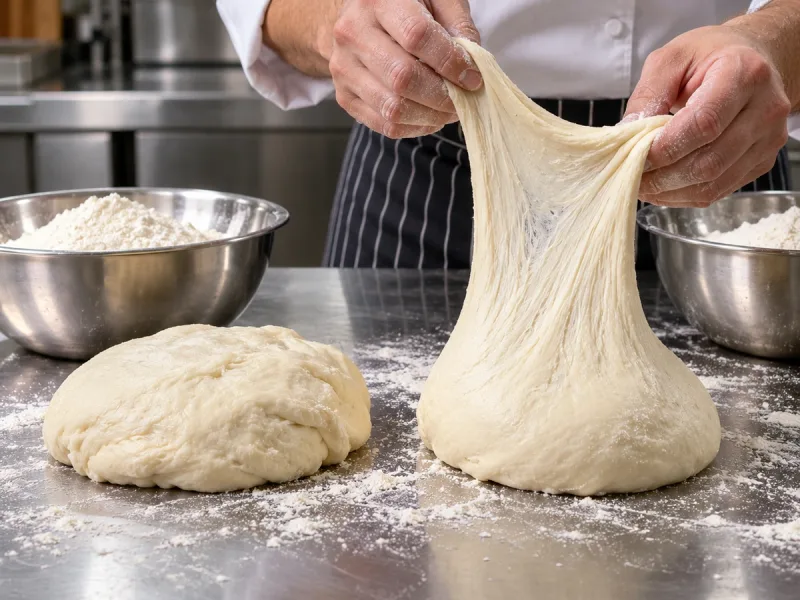
Bread Flour vs. All-Purpose Flour: Which Should You Use?
Bread flour and all-purpose flour are both wheat flours, but bread flour usually has more gluten-forming protein. That generally gives bread dough more strength and water-holding capacity, while all-purpose flour is designed to work across a wider range of baked goods. Neither is automatically “better”: use the flour the recipe was developed for when you can, and choose by the texture and dough strength you actually need.
Bread flour vs. all-purpose flour at a glance
| If you want… | Usually choose | Why |
|---|---|---|
| A strong yeast dough that must hold shape or support more water | Bread flour | Higher gluten-forming potential usually gives the dough more strength |
| A versatile flour for cookies, muffins, pancakes, quick breads and many everyday bakes | All-purpose flour | Moderate strength is easier to use across tender and structured bakes |
| Chewy bagels or a firmer, more resilient pizza dough | Bread flour | Extra dough strength can support a chewier result |
| A softer, less chewy result | All-purpose flour | Lower gluten-forming potential usually produces a more tender texture |
| The closest result to a tested recipe | The flour named in the recipe | The formula’s liquid, mixing and fermentation were developed around that flour |
The most useful rule is simple: read the protein information and intended use on the bag instead of assuming every flour with the same name behaves identically. Protein percentages and flour naming vary by brand and country.
What actually changes when the flour has more protein?
The gluten-forming proteins in wheat flour include glutenin and gliadin. Once flour is hydrated and mixed, they contribute to the gluten network that gives dough strength, elasticity and extensibility.
A flour with more gluten-forming protein generally has the potential to build a stronger dough. That can help a fermented dough retain gas, resist spreading and support a taller or chewier structure. It also tends to absorb more water than a lower-protein flour.
Protein percentage is useful, but it is not the whole story. Wheat variety, milling, starch damage, bran content and the recipe itself also affect how flour behaves. This is why two bags carrying the same broad flour name can produce noticeably different doughs.
When bread flour is the better choice
Bread flour is most useful when the formula benefits from extra dough strength. Typical examples include:
- lean yeast breads that need to hold a strong shape;
- higher-hydration doughs where a weak flour would feel excessively loose;
- bagels and similar breads where chew is part of the intended texture;
- pizza formulas designed for a stronger, more elastic dough;
- long-fermented doughs that must remain structurally sound through handling and proofing.
That does not mean bread flour automatically creates a more open crumb or a better loaf. Fermentation, hydration, shaping, dough development and proofing matter just as much. A strong flour used in the wrong formula can make the dough feel unnecessarily tight.
When all-purpose flour is the better choice
All-purpose flour is the more versatile option. It is commonly used for cookies, muffins, pancakes, quick breads, biscuits, many cakes, enriched rolls and plenty of yeast breads.
In bread, all-purpose flour can work very well when the recipe is designed around it. It may produce a softer or slightly less chewy result than a stronger bread flour, but the outcome depends on the full formula.
For cakes and very tender pastry, all-purpose flour is not always the lowest-protein choice available; cake or pastry flour may be more appropriate when a recipe specifically calls for it. The important point is to follow the formula rather than treating “lower protein” as automatically better.
How to substitute one for the other without using a fixed water percentage
A common mistake is to apply a universal rule such as “reduce the water by 5–10%” when replacing bread flour with all-purpose flour. Flour absorption varies too much by brand, milling and recipe for that to be reliable.
A better approach is to use the original flour if possible. If you must substitute in a yeast dough:
Using all-purpose flour instead of bread flour
Mix the dough and judge its consistency against the recipe’s intended result. If the dough is much looser, spreads rapidly and cannot build tension even after normal mixing or folding, the substitute flour may not support the same amount of water.
Rather than adding large amounts of extra flour immediately, give the flour time to hydrate and develop. If the dough still behaves far looser than the recipe describes, make only small adjustments and record them for the next batch.
Using bread flour instead of all-purpose flour
The dough may feel firmer or more resistant because the flour can bind more water. If it is clearly drier or tighter than the recipe describes after proper mixing and rest, add liquid gradually until the dough reaches the intended consistency.
You normally do not need to change the yeast quantity merely because you changed between these two flours. The main differences you are managing are dough strength, absorption and texture.
Use dough behavior as the control point
When a substitution is unavoidable, the dough itself is more useful than a universal percentage.
Look for these signals:
- Too slack for the intended bread: it spreads quickly, struggles to hold surface tension, and stays weak after the recipe’s normal folds or mixing.
- Too tight: it resists stretching, tears early, or feels noticeably drier than the recipe describes.
- Developing as intended: it becomes cohesive, gains elasticity and can be shaped without immediately collapsing or tearing.
These signals are not a diagnosis by themselves. Overproofing, undermixing, excessive water, weak shaping and fermentation temperature can create similar symptoms. If a loaf stays dense even with the intended flour, use the separate guide to common causes of dense bread rather than assuming flour protein is the only cause.
Flour labels change by country
Flour names are not perfectly interchangeable across markets.
United States and Canada
“All-purpose flour” and “bread flour” are common retail categories, but the actual protein level still varies by brand. Bread flour is generally positioned as the stronger option.
United Kingdom
“Plain flour” fills many of the same everyday roles as North American all-purpose flour, while “strong white bread flour” is sold specifically for stronger bread doughs. The exact protein content still belongs on the product label, not in a universal definition.
Germany and parts of Central Europe
Type numbers such as 405 or 550 primarily describe mineral content rather than directly stating gluten strength. A Type 550 flour is commonly used for rolls, yeast dough, pizza and white bread, but the type number alone does not tell you the protein content or dough strength. Check the nutrition panel and the mill’s intended-use guidance.
This is especially important when adapting an American recipe abroad: translate the function of the flour, not just the product name.
Common flour-choice mistakes
Assuming bread flour is always better for bread. Some bread formulas are intentionally developed for all-purpose flour. Stronger flour changes the dough and can change the final texture.
Treating one protein range as universal. Protein varies by manufacturer and market. The label on the bag is more useful than a generic internet range.
Trying to compensate for lower-protein flour only by kneading longer. Mixing develops the gluten-forming proteins that are present; it does not add more of them. More mixing can improve development up to a point, but it cannot make every all-purpose flour behave like bread flour.
Using a fixed hydration correction for every brand. Absorption is flour-specific. Judge the dough against the recipe’s intended consistency and adjust gradually only when needed.
Equating European type numbers with protein percentage. The two systems describe different properties. Type 550, for example, is not simply a European synonym for a specific North American bread-flour protein level.
Which flour should you buy?
If you bake many different things and want one versatile white wheat flour, all-purpose flour is the practical starting point.
If you regularly make chewy breads, bagels, strong pizza doughs or wetter yeast doughs, keeping bread flour on hand gives you more dough-strength options.
If a recipe specifies a flour, use that specification before applying a general rule. The recipe author may have balanced hydration, mixing and fermentation around that flour.
Frequently asked questions
Can I make bread with all-purpose flour?
Yes. Many bread recipes are designed for all-purpose flour. The dough may be less strong than the same formula made with a higher-protein bread flour, so follow the recipe’s texture and handling cues.
Can I use bread flour for cookies?
Yes, but it can change the texture, often toward a firmer or chewier result. If the cookie recipe was developed for all-purpose flour, use bread flour only when you are comfortable changing that texture.
Is bread flour always higher in protein?
It is generally sold as the higher-protein option, but exact numbers vary by brand and market. Compare the packages you can actually buy.
Should I change the yeast when I change flour?
Not simply because the flour changed. Keep the yeast as written unless another part of the recipe requires a change. Watch the dough’s consistency and fermentation instead.
Is German Type 550 the same as bread flour?
Not exactly. The type number reflects mineral content, not a guaranteed protein level. Type 550 is often suitable for rolls, pizza and white bread, but check the specific flour’s protein content and intended use.
Bottom line
Choose bread flour when the dough needs extra strength, chew or water-holding capacity. Choose all-purpose flour when you want versatility or when the recipe was designed around a moderate-strength flour. When substituting, stop relying on fixed water percentages and compare the dough with the recipe’s intended feel, strength and shaping behavior.