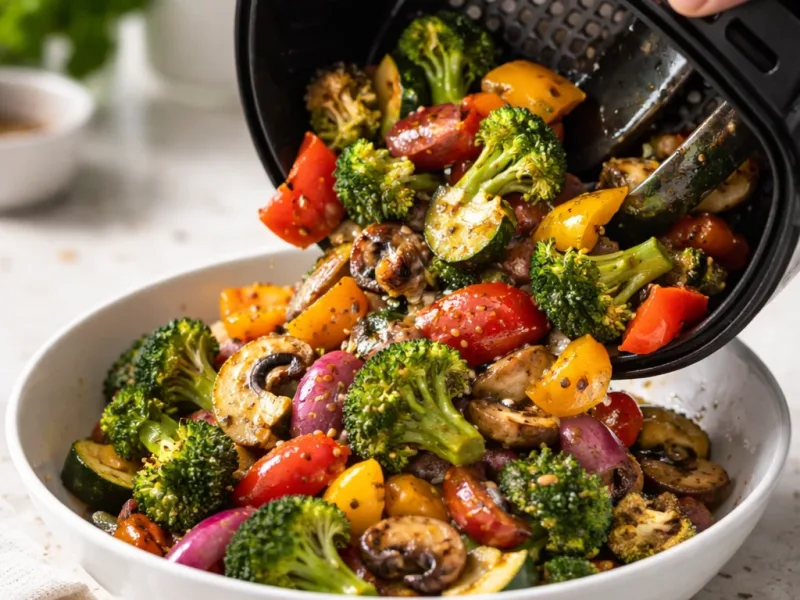
Why This Method is a Game Changer for Home Cooks
Cooking vegetables has traditionally involved a trade-off between health and flavor. Boiling preserves nutrients but often results in a soft, unappealing texture, while deep frying creates a delicious crunch at the expense of high fat content. The emergence of the air fryer has permanently solved this dilemma. By utilizing a compact chamber and powerful fans, this appliance delivers the crispy, roasted results of a professional oven in a fraction of the time. This guide serves as your definitive roadmap to mastering every type of produce, ensuring that your daily meals are both nutrient-dense and exceptionally flavorful.
Whether you are a complete beginner or a seasoned home chef, understanding the fundamentals of this device allows you to transform humble ingredients into restaurant-quality sides. We will explore the simple science behind the "crunch," how to categorize your produce for the best results, and the essential steps to prevent common mistakes. By following these proven strategies, you will move beyond basic recipes and develop an intuitive sense for how to air fry any vegetable in your refrigerator.
Understanding the Physics of Your Air Fryer
The Simple Science of High Velocity Convection
At its core, an air fryer is a highly concentrated convection oven. While a traditional oven relies on ambient heat that slowly radiates through a large space, an air fryer uses a powerful mechanical fan to circulate hot air at high speeds. This creates a "thermal vortex" that surrounds the food, stripping away surface moisture almost instantly. This rapid evaporation is what allows the vegetable to develop a crisp outer layer while the inside remains tender and juicy.
This process facilitates the Maillard reaction—the chemical browning that creates savory, complex flavors in roasted foods. Because the heating element is located very close to the food basket, the transfer of energy is much more efficient than in other cooking methods. This efficiency means you can achieve a perfect sear on your vegetables using 80% to 90% less oil than traditional roasting or frying. Understanding that your air fryer is essentially a "moisture-removal machine" is the first step toward achieving the perfect texture every time you cook.
Categorizing Produce for Success
Grouping Ingredients by Density and Water Content
Not all vegetables react to heat in the same way. To master air frying, you must learn to categorize your ingredients into three main groups: starchy roots, cruciferous greens, and high-water varieties. Starchy vegetables, such as potatoes, parsnips, and beets, have dense cellular structures that require longer exposure to heat to soften their internal fibers. If you cook them too fast, the outside will burn before the inside is edible.
Cruciferous vegetables like broccoli and cauliflower are built differently. Their complex, branching shapes provide a massive surface area that catches the hot air, leading to very rapid browning. When you prepare Air Fryer Crispy Broccoli, the goal is to manage this high surface area so the florets become crunchy without turning into carbon. Finally, high-water vegetables like zucchini and mushrooms need a high-heat, short-duration approach to flash-evaporate their liquid before they have a chance to turn soggy in the basket.
Preparing Your Produce for Maximum Crunch
Essential Steps Before Turning on the Device
The secret to professional-grade results happens on the cutting board. Uniformity is the most important rule of preparation. If your vegetable pieces are of varying sizes, the smaller ones will overcook and become bitter, while the larger pieces will remain raw and tough. Take an extra minute to ensure that every carrot coin or broccoli floret is roughly the same size to promote even thermal distribution across the entire batch.
After cutting, you must address the "Rule of Dryness." If your vegetables are even slightly wet from washing, the air fryer will spend the first several minutes turning that water into steam. This creates a humid environment in the basket that leads to soft, limp results. Always use a salad spinner or a clean kitchen towel to pat your vegetables bone-dry before adding oil. This simple step is what separates a 10/10 crispy side dish from a mediocre, steamed one. When you are getting ready to cook Air Fryer Asparagus, ensuring the stalks are dry is the only way to get those sought-after charred tips.
The Role of Healthy Fats in Air Frying
Why a Small Amount of Oil is Technically Necessary
While the air fryer is often marketed as a tool for "oil-free" cooking, the truth is that a small amount of fat is essential for the best texture and flavor. Oil acts as a thermal conductor, helping the hot air transfer its energy to the vegetable surface more efficiently. Without it, the exterior of the plant can become dry and "dusty" rather than crisp and golden. A thin, even coating also provides a surface for your seasonings to stick to, preventing them from being blown away by the internal fans.
When selecting an oil, prioritize those with a high smoke point, such as avocado oil, grapeseed oil, or refined olive oil. These fats can withstand the 400°F (200°C) environment without breaking down. A general rule of thumb is to use 1 to 2 teaspoons (5–10 ml) per 1 lb (500 g) of vegetables. For dense root vegetables like Air fryer carrots, a light toss in a bowl ensures every piece is lubricated, which helps the natural sugars caramelize beautifully under the intense convection heat.
Mastering Temperature and Timing
A Universal Framework for Most Vegetable Varieties
Most air fryer vegetables thrive in a temperature range between 360°F (180°C) and 400°F (200°C). Lower temperatures are generally reserved for delicate items or very dense roots that need a head start on softening, while higher temperatures are best for flash-searing greens. If you are ever in doubt, starting at 380°F (190°C) is a safe middle ground that works for the vast majority of produce.
Timing is the second half of the equation. Because air fryers are so efficient, cooking times are usually 30% to 50% shorter than in a conventional oven. Most batches will take between 8 and 15 minutes. For example, when you are aiming for an Air Fryer Zucchini****with a tender middle and seared edges, a 10-minute cycle at a higher heat is often the sweet spot. Always remember to preheat your unit for 3 to 5 minutes; hitting a hot basket immediately starts the searing process, which is vital for moisture retention.
Optimizing the Basket for Air Circulation
Why Spacing is the Key to Success
The most common mistake beginners make is overcrowding the basket. It is tempting to cook a large batch all at once, but if the air cannot move freely between the pieces of food, the "air fryer" simply becomes a very small, inefficient oven. When vegetables are piled on top of each other, they trap steam, which destroys the crispness you are working so hard to achieve.
To get 10/10 results, you must follow the "Single Layer Rule." Spread your ingredients out so there is visible space between them. This allows the hot air to circulate 360 degrees around every piece of produce. If you are cooking a large amount, it is always better to cook in two smaller batches than one large, overcrowded one. Proper spacing ensures that every piece of Air Fryer Mushrooms has the opportunity to brown and develop a meaty, savory crust.
The Importance of the Mid-Point Shake
How Agitation Ensures Even Browning
Even with a single layer, the areas where the vegetables touch the bottom of the basket will receive less airflow than the tops. This is why the "shake" is a mandatory step in the air frying process. Halfway through your cooking time, you should remove the basket and give it a vigorous shake. This redistributes the oil and moves the pieces around so that different surfaces are exposed to the direct path of the hot air.
For larger or more delicate items, you may find that using silicone-tipped tongs to individually flip the pieces is more effective than shaking. This extra level of care is especially important when you are making Buffalo Cauliflower Bites, as it ensures the coating sets and crisps evenly on all sides. Regular agitation prevents "wet spots" and guarantees that the Maillard reaction occurs uniformly across the entire batch.
Seasoning Strategies for Global Flavors
How to Make Spices Stick and Flavors Bloom
The air fryer is an incredible tool for flavor development because the dry heat causes spices to "toast" and release their aromatic oils. However, because of the powerful fans, you must be careful with how you apply seasonings. Lightweight dried herbs can literally be blown off the food and into the heating element, where they will burn and smell acrid. To prevent this, always toss your vegetables in oil first, then add your spices. The oil acts as a glue, locking the flavor onto the plant.
For a Mediterranean profile, you can focus on flavor concentration. When you prepare Roasted Cherry Tomatoes, the intense heat blisters the skin and reduces the juice into a thick, sweet syrup. This concentrated flavor is much more powerful than what you would get from a standard oven. Don't be afraid to experiment with finishing your vegetables with a squeeze of fresh lemon, a grating of hard cheese, or a drizzle of balsamic glaze after they come out of the air fryer to add a layer of fresh, bright acidity.
Comparison of Cooking Methods
Understanding When to Use the Air Fryer
While the air fryer is our favorite tool for crispy vegetables, it is helpful to understand how it compares to other methods. A conventional oven is superior for cooking very large quantities, but it lacks the speed and textural precision of the air fryer. On the other hand, stovetop cooking provides direct contact heat, which creates a different type of browning and allows you to incorporate more liquid-based sauces.
Nutritional Benefits of Convection Cooking
Preserving Essential Vitamins and Minerals
One of the biggest advantages of air frying vegetables is the preservation of their nutritional integrity. Many traditional cooking methods, like boiling, cause water-soluble vitamins (such as Vitamin C and B-complex) to leach out into the water, which is then discarded. Because the air fryer uses dry air and very little liquid, these essential nutrients remain trapped inside the vegetable.
Furthermore, the shorter cooking times mean that heat-sensitive antioxidants have less time to degrade. Research has shown that convection roasting can actually increase the bioavailability of certain nutrients by breaking down tough cellular walls, making it easier for your body to absorb them. By using a small amount of healthy fat during the process, you also aid the absorption of fat-soluble vitamins like A, D, E, and K, ensuring that your meal is as healthy as it is delicious.
Global Seasoning and Flavor Adaptation
Creating Restaurant Quality Sides at Home
The air fryer's ability to "bloom" spices makes it a perfect tool for exploring international cuisines. For a Latin-inspired side, try tossing your vegetables in lime juice, cumin, and chili powder before air frying. For an Asian profile, a light coat of toasted sesame oil and a finish of ginger and soy sauce can transform a simple batch of greens. The high-heat environment mimics the searing effect of a wok, giving you that "charred" flavor that is usually difficult to achieve in a home kitchen.
You can also use the air fryer to toast nuts or seeds to use as a garnish for your vegetables. Adding a handful of sliced almonds or sesame seeds during the last 2 minutes of the cooking cycle adds a layer of toasted crunch that elevates the dish to a professional level. This versatility is why the air fryer has become a staple for those who enjoy a diverse, global menu.
Maintaining Your Equipment for Top Performance
Easy Cleaning for Consistent Airflow
To keep your air fryer producing 10/10 results, regular maintenance is required. Over time, grease and tiny food particles can build up on the internal fan and the heating coil. This buildup acts as an insulator, reducing the speed of the airflow and making the machine less efficient. If you notice your vegetables aren't as crispy as they used to be, it might be time for a deep clean of the interior.
Always wait for the unit to cool completely before cleaning. Most baskets are dishwasher safe, but washing them by hand with a soft sponge will help preserve the non-stick coating for much longer. Avoid using metal utensils in the basket, as scratches will cause your vegetables to stick, which ruins the "Rule of Dryness" by tearing the skin of the plant. A well-maintained air fryer ensures that the convection vortex remains powerful and unobstructed for years of perfect cooking.
Solving Common Air Frying Mistakes
How to Troubleshoot Soggy or Burnt Results
If your vegetables are coming out soggy, you are likely either overcrowding the basket or you didn't dry them well enough before cooking. Try reducing the amount of food or increasing the temperature by 10°F to 20°F (approx. 5–10°C) to help the moisture evaporate faster. Remember that the air needs to "scrub" the surface of the food to create that crunch.
If your vegetables are burning on the outside but are still raw in the middle, your temperature is too high. This is common with dense root vegetables. The solution is to lower the heat slightly and add a few minutes to the timer. For very stubborn vegetables, you can even add a teaspoon of water to the bottom of the air fryer drawer (under the basket) to create a small amount of steam that helps soften the interior while the air crisps the exterior.
Developing Your Culinary Intuition
Mastering air fryer vegetables is not about following a single recipe; it is about understanding the principles of heat, moisture, and airflow. Once you realize that the air fryer is a tool for rapid dehydration and browning, you can begin to experiment with every vegetable in the produce aisle. From the snap of a perfectly cooked green bean to the creamy interior of a roasted carrot, the possibilities are endless.
As you continue to use your air fryer, you will develop a "feel" for the machine. You will start to recognize the smell of perfectly caramelized sugars and the sound of the basket as you shake it. This culinary intuition is the mark of a true home chef. By using the strategies outlined in this guide, you are well on your way to making vegetables the most exciting and anticipated part of every meal you serve.