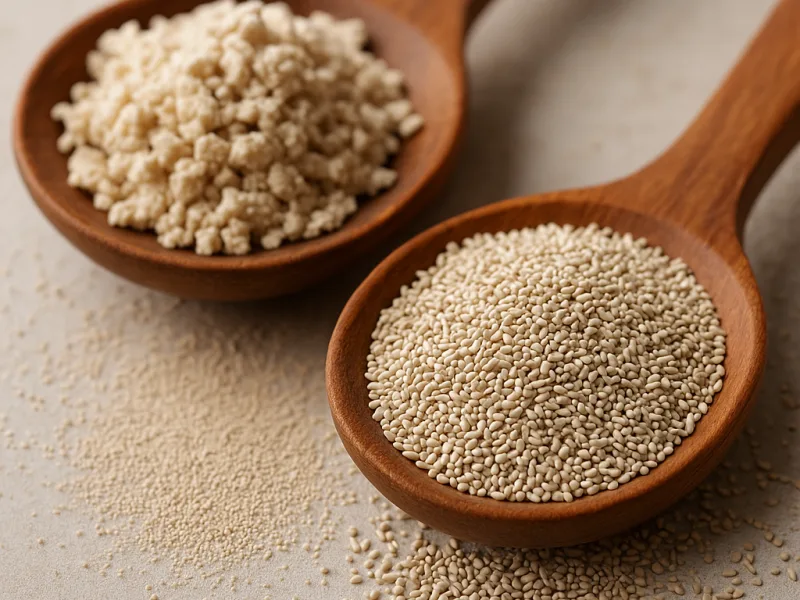
The Essential Guide to Choosing the Right Yeast for Bread Recipes
When you open your pantry, eager to bake a batch of warm, fragrant bread, you might find yourself holding two small packets: Active Dry Yeast and Instant Yeast. They look similar—tiny beige granules promising to transform flour and water into airy loaves—but many bakers discover that understanding the difference between active dry yeast and instant yeast is crucial for success. Whether you’re an experienced professional or a weekend enthusiast, choosing the right yeast can make the difference between a chewy, well-developed crumb and a dense, disappointing loaf.
Imagine this: you’re preparing dough early in the morning, still bleary-eyed, and you toss a packet of yeast into the mix, assuming all yeasts work the same way. Hours later, you peek under the towel only to find a stubbornly flat lump. That frustration has inspired countless bakers to explore precisely how these yeasts differ, how to use them properly, and why a nuanced approach matters.
Let’s demystify active dry yeast vs instant yeast, exploring each aspect in depth—how they’re produced, what makes them distinct, and when each should be your yeast of choice.
What Is Yeast, and Why Does It Matter?
Before comparing varieties, it helps to understand what yeast actually is. Yeast is a living microorganism—a fungus that feeds on sugars and starches, producing carbon dioxide and alcohol through fermentation. This process is what makes dough rise. Without yeast, bread would be little more than a bland, dense cracker.
Bakers commonly use Saccharomyces cerevisiae, a species cultivated for its consistent performance and subtle flavor profile. Modern yeast production creates several commercial forms:
- Active Dry Yeast
- Instant Yeast (also called Rapid Rise or Bread Machine Yeast)
- Fresh Yeast (also known as Cake Yeast or Compressed Yeast)
While fresh yeast was once the industry standard, active dry and instant yeast are now far more prevalent in home and professional kitchens alike. Their longer shelf life and ease of storage make them practical and reliable choices.
How Active Dry Yeast Is Made and How It Works
Active dry yeast was developed in the mid-20th century to provide a shelf-stable alternative to fresh yeast. The production process involves:
- Cultivating yeast cells in large fermentation tanks.
- Separating and concentrating the cells from the liquid medium.
- Drying them at controlled temperatures, which renders most cells dormant.
- Coating the granules with dead yeast cells, which protect the live cells inside.
Because of this protective layer, active dry yeast requires rehydration in warm liquid (generally between 37–43 °C) to dissolve the coating and activate the living cells. Many bakers describe the ritual of proofing active dry yeast as comforting: the yeasty fragrance wafts up as the granules dissolve and begin to bubble.
Professional Insight: Always check the expiration date on active dry yeast. If it’s past its prime, the granules may no longer activate effectively, resulting in flat dough.
What Makes Instant Yeast Different?
Instant yeast emerged later, offering a more convenient alternative. It undergoes a gentler drying process that leaves a much higher proportion of live cells intact. The granules are finer and more porous, allowing instant yeast to dissolve directly into dry ingredients without prior proofing.
This difference has real consequences in the kitchen:
- Instant yeast activates faster, shortening fermentation times.
- It tolerates lower temperatures more effectively.
- Recipes using instant yeast often require less rising time.
Many bakers appreciate how predictable and forgiving instant yeast can be. If you have limited time or prefer a streamlined workflow, instant yeast is often the best choice.
Quick Tip: If you’re in a hurry, swapping active dry yeast for instant yeast can shave 15–20 minutes off rising times.
Key Differences in Texture, Taste, and Performance
While both yeasts ultimately produce carbon dioxide and ethanol, there are subtle distinctions:
- Texture of the Dough: Instant yeast creates a more even crumb structure because it disperses quickly and starts fermenting faster.
- Flavor Development: Active dry yeast’s slower activation allows for slightly longer fermentation, which can yield deeper, more nuanced flavors.
- Rise Time: Instant yeast works about 10–20% faster.
- Convenience: Instant yeast does not require proofing, saving a step.
Some professional bakers argue that these differences can affect the final loaf in small but perceptible ways, especially in enriched doughs or slow-rise breads.
Common Mistake: Many people assume you can always substitute one-for-one without adjustments. If you swap instant yeast for active dry, consider reducing the quantity by about 25%.
How to Substitute Active Dry Yeast and Instant Yeast
The good news: both yeasts are interchangeable if you make minor adjustments. Here’s how:
- If substituting active dry for instant, increase the quantity by roughly 25%.
- If using instant in place of active dry, decrease the quantity by 25%.
- Always dissolve active dry yeast in warm water.
- Add instant yeast directly to your dry ingredients.
Professional Insight: In recipes with long, cold fermentations (like overnight focaccia), both yeasts perform well, though instant yeast can create a slightly lighter crumb.
When to Use Each Type of Yeast
Active Dry Yeast is ideal for:
- Recipes requiring a traditional proofing step.
- Breads where slower fermentation enhances flavor.
- Bakers who enjoy the ritual of blooming yeast.
Instant Yeast is preferable when:
- You need shorter rise times.
- You’re working with bread machines.
- You want consistent, predictable performance.
Many professionals keep both on hand, choosing based on the recipe, time constraints, and desired characteristics.
Sensory Considerations and Personal Observations
When you first work with active dry yeast, you may notice its characteristic earthy aroma as it dissolves—a sign the yeast is coming back to life. Watching the foam bloom across the surface of warm water is both reassuring and satisfying. In contrast, instant yeast feels almost too easy—sprinkle, mix, and move on—but the speed and reliability can be liberating.
During testing for this article, I baked side-by-side loaves of classic country bread. The active dry loaf developed a subtly tangier aroma during the slow rise, while the instant yeast loaf had a softer, almost cake-like crumb. Both were excellent, but each had its own character.
Quick Tip: If you enjoy a stronger fermented flavor, lean toward active dry yeast and longer proofing times.
Best Practices for Storing Yeast
Regardless of the type you choose, proper storage will keep your yeast potent:
- Keep unopened packets in a cool, dry place.
- Store opened yeast in an airtight container in the refrigerator or freezer.
- Use refrigerated yeast within four months and frozen yeast within six months.
Common Mistake: Leaving yeast exposed to air or moisture can quickly degrade its performance.
Professional Insights on Dough Handling
Many novice bakers worry about killing their yeast with hot water. The safest temperature is around 38 °C—warm but not scalding. Using a kitchen thermometer can help you avoid mistakes. If the liquid feels uncomfortably hot to your touch, it’s too warm for yeast.
Another consideration: salt inhibits yeast activity. Always mix salt into flour before combining with yeast or keep salt and yeast separate until dough formation is underway.
Potential Risks and Limitations
- Expired Yeast: May fail to activate, leading to dense bread.
- Overproofing: Dough left too long can collapse.
- Underproofing: Insufficient rising time yields tight, heavy crumb.
- Heat Damage: Liquids above 50 °C will kill yeast cells.
Understanding these risks empowers you to bake with confidence.
Related Resources
Explore these guides for further insights:
- How to Bake Sourdough Bread at Home
- Mastering Enriched Doughs: Brioche and Challah
- The Science of Gluten Development in Bread
FAQ Section
What is the main difference between active dry yeast and instant yeast? Active dry yeast must be dissolved in warm water before use, while instant yeast can be mixed directly with dry ingredients and activates faster.
Can I substitute active dry yeast for instant yeast in any recipe? Yes, but increase the amount by about 25% and proof it in warm water before adding.
Does instant yeast affect bread flavor? Instant yeast may yield a slightly milder flavor due to shorter fermentation times.
How should I store yeast to keep it fresh? Keep unopened yeast in a cool, dry place. Once opened, refrigerate or freeze in an airtight container.
How long does yeast last? Active dry and instant yeast last about 2 years unopened. Once opened, use refrigerated yeast within 4 months.
Is instant yeast better for bread machines? Yes, instant yeast is often labeled as “bread machine yeast” because it integrates well with automated cycles.
Why didn’t my dough rise? Possible reasons include expired yeast, overly hot water killing the yeast, or too much salt.
Can I use instant yeast for pizza dough? Absolutely. It works well and offers a fast, reliable rise.
Do different yeasts change the texture of bread? Yes. Instant yeast can create a finer crumb, while active dry yeast may lead to a chewier texture.
What temperature is ideal for activating yeast? Around 38 °C is optimal—warm but not hot.
Choosing between active dry yeast and instant yeast doesn’t have to be a guessing game. Each has strengths suited to different techniques and timelines. If you love the ritual and flavor of slow fermentation, active dry yeast can be a rewarding choice. When efficiency and consistency are paramount, instant yeast shines. By understanding how each type behaves, you can confidently create everything from rustic artisan loaves to soft sandwich bread. Ready to deepen your baking expertise? Explore related resources and start experimenting with the techniques that fit your style and schedule.