Base recipe: 6
Your kitchen companion
Ingredients
Check off ingredients as you prepare them.
Follow the steps at your own pace.
Method
Prepare the syrup – In a saucepan, combine sugar and water, stirring until dissolved. Bring to a boil over medium heat, then reduce to a simmer for 10 minutes. Add lemon juice and honey, stirring well. If desired, add rose water or orange blossom water for additional aroma. Let the syrup cool completely.
Preheat the oven to 180°C (350°F).
Prepare the kadayif noodles – Gently separate the strands to ensure they are light and fluffy. Drizzle the melted butter over the noodles, ensuring all strands are well-coated. Mix gently with your hands to avoid breaking them.
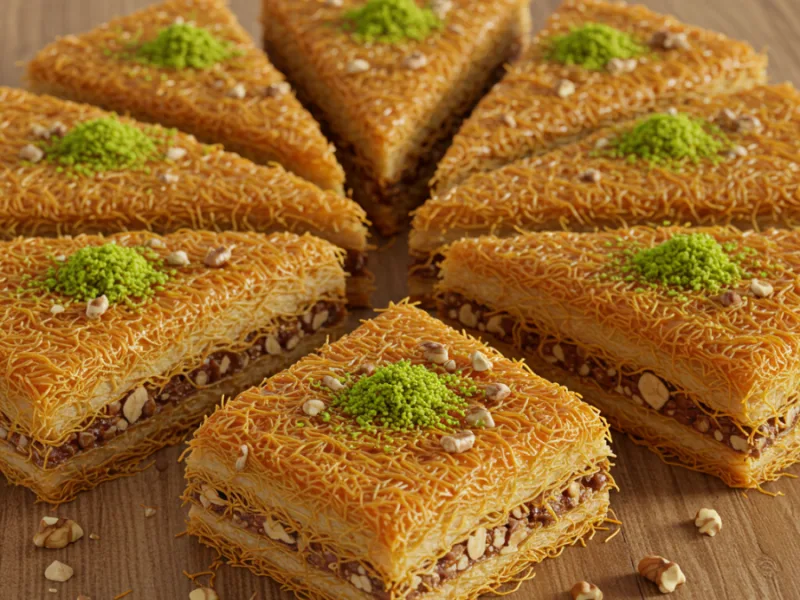
Assemble the dessert – Spread half of the buttered kadayif noodles evenly in a greased baking pan (22 cm / 9 inches round or square). Press down gently to create an even layer.
Add the nut filling – Evenly distribute chopped walnuts or pistachios over the first layer.
Top with the remaining kadayif noodles, pressing gently to secure the filling in place.
Bake for 25 minutes, or until golden brown and crisp.
Pour the cooled syrup over the hot kadayif, ensuring even distribution. Let it sit for at least 30 minutes to allow the syrup to be fully absorbed.
Slice and serve – Cut into squares or diamond shapes and garnish with extra crushed nuts. Serve warm or at room temperature..
Extra technique, safety notes and details when you want to go deeper.
More tips & details
Authentic Kadayif Noodles: A Delicate and Irresistible Dessert
The Rich Tradition Behind Kadayif Noodles
Kadayif noodles, also known as shredded phyllo dough, are a fundamental ingredient in many Middle Eastern and Mediterranean desserts. Their delicate, crispy texture and ability to soak up sweet syrups make them perfect for creating some of the most beloved treats, such as kunafa, baklava-style pastries, and nut-filled rolls. Originating centuries ago, these fine strands of dough have been cherished in Turkish, Greek, and Arab cuisines, where they are skillfully layered, rolled, or shaped into golden, crunchy delights.
Made from a simple mixture of flour, water, and a touch of salt, kadayif noodles are transformed into a silky batter, which is drizzled onto a hot surface to create thin, hair-like strands. Once dried, these noodles become a versatile base for desserts that can be baked, fried, or layered with ingredients like pistachios, walnuts, cream, and fragrant syrups. The result is a decadent and flaky texture, enhanced by the perfect balance of butter, sugar, and aromatic essences such as rose water and orange blossom water.
How Kadayif Noodles Elevate Traditional Desserts
One of the most captivating aspects of kadayif noodles is their ability to absorb flavors while maintaining a crisp and airy texture. Whether soaked in rich honey syrup or layered with melted ghee, these delicate strands provide the perfect foundation for desserts that are both crunchy and soft in every bite. Their fine structure ensures that each layer of nuts, custard, or cheese filling is evenly distributed, resulting in a harmonious blend of textures and flavors.
Among the most famous desserts that highlight kadayif noodles is kunafa, a dish that has captivated food lovers across the Middle East and beyond. This luscious dessert consists of buttery shredded dough layered with stretchy cheese or creamy semolina filling, then baked to golden perfection and drenched in a light citrus-infused syrup. Another popular variation is kadayif rolls, where the noodles are wrapped around a nutty filling, baked until crisp, and finished with a drizzle of sweetened syrup.
For those who enjoy a contrast of textures, kadayif noodles can also be used as a crunchy topping for desserts, adding an irresistible golden crispness to custards, puddings, and ice creams. Their light, airy structure ensures that each bite delivers a delicate crunch, making them a perfect complement to rich and creamy fillings.
The Perfect Balance of Sweetness and Aroma
What makes kadayif noodle desserts truly exceptional is the balance between sweetness, crunch, and fragrance. A well-made kadayif dish is never overwhelmingly sweet; instead, it carries a delicate, honeyed flavor that enhances the natural richness of toasted nuts and creamy fillings. The infusion of cardamom, cinnamon, rose water, or orange blossom water adds depth and sophistication, elevating each bite into a multi-sensory experience.
The golden hue of baked kadayif noodles is another defining characteristic that makes these desserts visually stunning. When prepared with pure butter or ghee, the layers develop a beautiful crisp texture, ensuring that the final dish is flaky and melt-in-the-mouth. To achieve the perfect golden-brown color, careful attention is given to baking times and temperatures, as well as the generous brushing of butter or clarified ghee.
The Versatility of Kadayif Noodles in Modern Desserts
While kadayif noodles have deep historical roots, they continue to inspire modern dessert creations that push the boundaries of traditional flavors. Today, chefs and home bakers experiment with unique fillings and toppings, incorporating ingredients like dark chocolate, caramelized fruits, and spiced syrups to give classic kadayif desserts a contemporary twist.
For a fusion of flavors, some recipes combine creamy mascarpone or ricotta with the crunchy layers, creating a dessert that is both rich and delicate. Others take inspiration from Western pastry techniques, pairing kadayif noodles with salted caramel, vanilla custard, or even espresso-infused syrups for a more indulgent and complex taste.
For those looking for a lighter alternative, kadayif noodles can also be used to create airy, no-bake desserts, where they are gently toasted and layered with fresh fruits, yogurt, and a drizzle of honey. This variation offers a refreshing contrast to the more traditional syrup-soaked versions, making it an ideal choice for those who prefer less sugar and more natural flavors.
A Timeless Ingredient for Exquisite Sweets
Kadayif noodles are more than just an ingredient; they represent a centuries-old tradition of craftsmanship and culinary artistry. Whether used in classic Middle Eastern sweets or reinvented in modern pastry creations, their delicate strands provide endless possibilities for those who appreciate the beauty of finely layered desserts.
From the buttery crunch of baked kunafa to the rich nuttiness of kadayif rolls, these fine strands of dough continue to enchant dessert lovers with their crispy texture and ability to absorb the most aromatic syrups. The next time you indulge in a kadayif-based dessert, take a moment to appreciate the meticulous preparation and deep cultural heritage behind each golden, flaky bite.
Elevating the Classic Kadayif Dessert
Choosing High-Quality Ingredients for Superior Flavor
The key to enhancing any traditional recipe lies in the quality of ingredients. When making kadayif, selecting fresh, high-quality butter rather than margarine can significantly improve the taste and texture. Pure unsalted butter allows the natural flavors of the dessert to shine, creating a rich, nutty aroma when baked.
For the filling, premium-grade nuts such as pistachios, walnuts, or hazelnuts provide a deeper, more complex flavor. Opting for lightly toasted nuts enhances their natural oils, giving the filling a more pronounced, crunchy texture. Additionally, grinding the nuts coarsely instead of finely ensures they maintain their structure, preventing the filling from becoming pasty.
If you prefer a more aromatic version, adding cinnamon, ground cardamom, or a hint of nutmeg to the nut mixture can bring a warm, spiced undertone that complements the sweetness of the syrup.
Adjusting the Sweetness Level for a Balanced Taste
Traditional kadayif recipes often use a generous amount of sugar syrup, which can sometimes be overpowering. A great way to improve the balance of flavors is by reducing the sugar content in the syrup or replacing part of it with natural sweeteners such as honey or maple syrup. These alternatives not only provide sweetness but also add depth and complexity to the flavor.
To prevent excessive sweetness, it's crucial to pour the syrup at the right temperature. The syrup should be cooled before being poured over the hot kadayif, ensuring that it is absorbed evenly without making the dessert soggy. If you prefer a lighter version, consider using a citrus-infused syrup with a mix of lemon, orange, or even grapefruit zest, which adds a refreshing contrast to the rich, buttery layers.
Enhancing the Texture for the Perfect Bite
Achieving the ideal crunchy yet soft texture is one of the most important aspects of making kadayif. One of the most common mistakes is pressing the dough too tightly into the pan, which prevents proper air circulation and results in a dense, hard texture. Instead, the kadayif noodles should be lightly fluffed and layered evenly to allow for even baking.
Another key tip is ensuring that every strand of kadayif is evenly coated with butter. If the butter is unevenly distributed, certain areas may turn dry while others become too greasy. Brushing melted butter thoroughly across the surface and gently tossing the noodles before layering ensures an even, golden-brown crust.
For an extra crispy texture, some bakers prefer baking kadayif at a slightly lower temperature (160°C / 320°F) for a longer time, allowing the layers to dry out more slowly and crisp up perfectly.
Common Mistakes and How to Avoid Them
- Using pre-packaged or stale kadayif noodles – Freshly made kadayif noodles yield a lighter, flakier texture compared to those that have been stored for too long. If using store-bought noodles, make sure they are soft, flexible, and not brittle.
- Overloading with syrup – Too much syrup can make the kadayif overly sweet and soggy. Always pour in small amounts, letting it absorb gradually.
- Not using enough butter – Skimping on butter results in dry, unappetizing layers. Proper butter distribution is crucial for even baking and a rich flavor.
- Skipping the resting time – Letting the kadayif sit for at least 30 minutes after adding the syrup ensures that the layers absorb the liquid evenly without turning mushy.
Healthier Alternatives Without Sacrificing Flavor
For those looking for a healthier version of kadayif, several ingredient swaps can be made:
- Whole wheat kadayif noodles – Provides more fiber and a nuttier flavor while maintaining a crispy texture.
- Olive oil or ghee instead of butter – Reduces saturated fat while still offering a rich taste. Ghee adds a deep, caramelized aroma, making it an excellent substitute.
- Raw honey instead of refined sugar – Offers a natural sweetness with antioxidant properties and a slightly floral aftertaste.
- Unsweetened nut milk for added moisture – A small amount of almond or cashew milk can be used in the syrup for a lighter, dairy-free version.
Why Homemade Kadayif Is the Best Option
Making kadayif at home allows complete control over ingredients, sweetness, and texture. Unlike store-bought or pre-made versions, homemade kadayif is free from preservatives and artificial flavors, ensuring a fresher and more authentic taste.
Additionally, home preparation allows for personalized variations, such as adjusting the amount of syrup, experimenting with different nut fillings, or adding floral notes like saffron or rose petals for a unique touch.
By following these enhancements and techniques, you can elevate the traditional kadayif recipe into a more refined, flavorful, and healthier dessert that still retains its authentic roots.
Recivelle · /recipe/kadayif-noodles-dessert