Base recipe: 6 portions
Your kitchen companion
Ingredients
Check off ingredients as you prepare them.
Follow the steps at your own pace.
Method
Season the beef tenderloin generously with salt and pepper. Heat olive oil in a large skillet over high heat. Sear the beef on all sides until well-browned (about 2–3 minutes per side). Remove from the pan and let it cool. Brush with English mustard while still warm. Set aside.
In the same pan, melt butter over medium heat. Add shallots and garlic, cook until soft (about 3 minutes). Add chopped mushrooms and thyme. Cook, stirring often, until all the moisture has evaporated (10–12 minutes). The mixture should be dry and paste-like. Let cool completely.
Lay a large sheet of cling film on a flat surface. Arrange prosciutto slices in slightly overlapping layers in a rectangular shape. Spread the mushroom mixture evenly on top.
Place the seared beef on top of the mushrooms. Using the cling film, roll the prosciutto and mushroom layer tightly around the beef. Twist the ends of the cling film to form a firm log. Chill in the fridge for 30 minutes.
Roll out the puff pastry on a lightly floured surface into a rectangle large enough to wrap the beef. Remove the cling film from the beef roll and place it in the center of the pastry.
Fold the pastry over the beef and seal the edges tightly. Trim any excess and press to seal. Place seam-side down on a baking tray lined with parchment paper.
Mix egg yolk with milk to make an egg wash. Brush the pastry with the egg wash. Optional: score the top gently with a knife for decoration.
Chill the wrapped beef for another 15 minutes. Meanwhile, preheat oven to 200°C (400°F).
Bake in the preheated oven for 35–45 minutes or until the pastry is golden brown and a meat thermometer inserted into the center reads 52–54°C (125–130°F) for medium-rare.
Let the Beef Wellington rest for 10 minutes before slicing and serving.
Extra technique, safety notes and details when you want to go deeper.
More tips & details
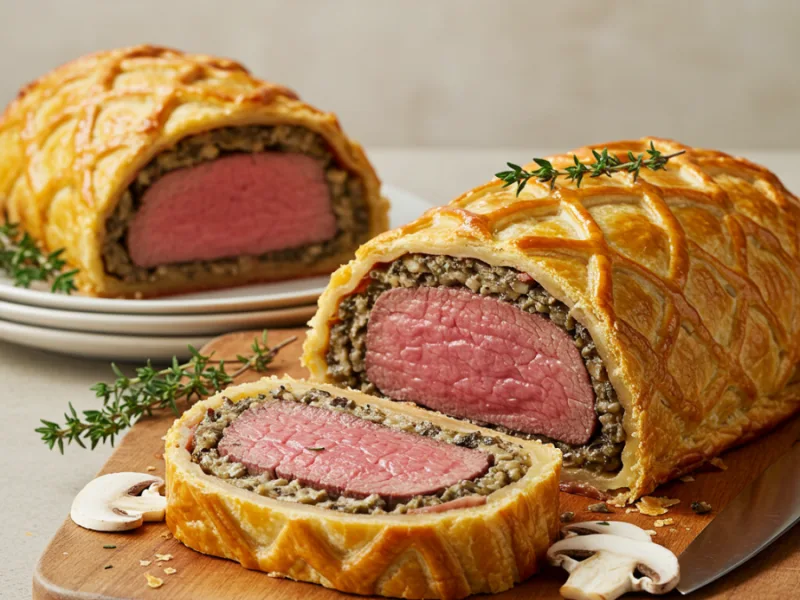
Elegant holiday centerpiece with perfectly cooked beef in pastry
A timeless dish for special occasions
There’s something undeniably impressive about presenting a classic Beef Wellington at the center of your table. This iconic dish is more than just a meal—it's a celebration of craftsmanship, precision, and elegance. From the succulent beef tenderloin wrapped in savory mushroom duxelles to the golden, flaky puff pastry, each component of this culinary masterpiece is designed to delight the senses. Whether you're hosting an intimate dinner party or preparing a festive holiday meal, Beef Wellington makes a statement of sophistication that few other dishes can rival.
Layers of flavor and texture in perfect harmony
At the heart of this dish lies a beautifully seared beef fillet, rich and juicy, carefully encased in a finely chopped mixture of mushrooms, shallots, garlic, and fresh herbs—commonly known as duxelles. This layer brings an earthy depth that complements the bold flavor of the meat. For an extra touch of indulgence, a layer of prosciutto is often wrapped around the beef, adding a delicate saltiness and helping to seal in the juices. The entire ensemble is then enveloped in a buttery puff pastry, which, once baked to golden perfection, provides a crisp and elegant contrast to the tender interior.
Each bite delivers a harmonious balance between the richness of the beef, the umami of the mushroom mixture, and the satisfying crunch of the pastry. This careful layering ensures that every slice of Beef Wellington looks as stunning as it tastes.
The story behind the tradition
Beef Wellington has long been associated with grand dining and culinary excellence. Though its exact origins are still debated, this dish has become a staple of fine dining menus and festive tables around the world. Its name is often linked to Arthur Wellesley, the 1st Duke of Wellington, celebrated for his victory at the Battle of Waterloo. Much like the Duke, the dish is bold, structured, and unmistakably British in character.
Over the years, it has evolved to reflect modern palates and culinary techniques, yet it has never strayed from its status as a luxurious centerpiece. Preparing it from scratch requires skill and attention to detail, making it a favorite among experienced cooks looking to showcase their talent.
Why this dish deserves the spotlight
Beef Wellington isn’t just about flavor—it’s about presentation, occasion, and the joy of cooking something truly remarkable. It’s the kind of dish that turns an evening into a memory, offering a sense of ceremony as it’s sliced and served. Despite its reputation for complexity, with a bit of planning and the right instructions, anyone can master this classic.
The beauty of this dish lies in its adaptability. You can make it your own by incorporating additional ingredients like a thin layer of pâté or seasonal herbs. Some modern takes even include a vegetarian twist, using hearty vegetables in place of beef, while preserving the same spectacular look and feel.
A rewarding culinary experience
Creating a Beef Wellington from scratch is a rewarding journey—from the careful preparation of the components to the moment you remove it from the oven and see the puff pastry perfectly golden. That first slice, revealing the rosy pink beef encased in savory layers, is a moment of pride and satisfaction.
Whether you’re preparing it for a holiday feast, an anniversary, or simply to challenge your cooking skills, this dish delivers more than just a meal—it offers an unforgettable experience. It shows your guests that you’ve gone the extra mile, that you care about flavor, presentation, and the joy of eating something truly special and celebratory.
This classic Beef Wellington recipe invites you to slow down, appreciate the process, and enjoy the rich reward that comes with a dish so steeped in tradition and flavor. Let it be the star of your next festive gathering and create memories that linger long after the last bite.
Creative ways to elevate the Beef Wellington experience
Enhancing flavor with thoughtful ingredient upgrades
Beef Wellington is revered for its rich layers and refined presentation, but there is always room for subtle improvements that elevate its complexity and character. One of the easiest ways to enrich the dish is by adjusting the ingredients to deepen the umami profile or enhance the contrast between textures.
Consider adding a thin layer of chicken liver pâté or foie gras over the seared beef before wrapping it in mushroom duxelles. This addition not only brings an extra dimension of flavor but also introduces a silky richness that melts into the tenderloin as it cooks. For a more intense and earthy note, replace standard button mushrooms with a mix of wild mushrooms such as chanterelles, porcini, or shiitake. Their natural umami concentration and meaty texture can make the duxelles more aromatic and satisfying.
To further amplify aroma and complexity, incorporate truffle paste or finely grated black truffle into the mushroom mixture. While optional, this enhancement transforms the dish into a fine-dining experience, adding an unmistakable scent and luxurious finish.
Why homemade Beef Wellington stands above pre-made options
A professionally crafted Beef Wellington at home offers a distinct advantage over store-bought or restaurant versions. First, you have full control over the quality and freshness of ingredients—from choosing a perfectly marbled tenderloin to selecting premium mushrooms and herbs. Secondly, when you prepare it yourself, you can adapt the seasoning, pastry thickness, and doneness of the meat to suit your personal taste and dietary preferences.
Homemade preparation also allows for creativity. You can experiment with wrapping techniques, decorative scoring, or incorporate regional touches like adding a thin layer of herb-infused oil or a brush of red wine reduction before sealing the pastry. This approach not only makes the meal more personal but turns the act of cooking into an artistic and rewarding experience.
Avoiding common mistakes that compromise results
There are a few common pitfalls that can affect the final outcome of Beef Wellington. One of the biggest is failing to dry out the mushroom duxelles properly. If this mixture retains too much moisture, it can cause the puff pastry to become soggy, ruining the desired flaky texture. To prevent this, always cook the duxelles until all liquid has evaporated, and let it cool completely before assembly.
Another error to avoid is overcooking the beef. Because the tenderloin continues to cook as it rests, it’s essential to remove the Wellington from the oven once the internal temperature reaches around 52–54°C (125–130°F) for medium-rare. Using a meat thermometer is the most reliable way to achieve the perfect doneness.
Also, be cautious with the puff pastry. Rolling it too thick can lead to uneven baking, while rolling it too thin may not support the structure or sealing of the dish. For the best texture and finish, aim for a uniform thickness of about 3–4 mm.
Lighter and healthier adaptations
For those seeking a lighter version of Beef Wellington, several thoughtful substitutions can be made without sacrificing flavor or presentation. Start by choosing whole grain puff pastry or gluten-free pastry alternatives for improved fiber content and reduced gluten. Instead of prosciutto, which is high in sodium, use thin slices of smoked turkey or zucchini ribbons, grilled and patted dry, to serve as the barrier between the duxelles and pastry.
Consider replacing traditional butter in the mushroom mixture with olive oil, which offers healthy monounsaturated fats and a subtle Mediterranean flavor. For an even leaner protein option, substitute beef tenderloin with a smaller center-cut pork fillet or even a meaty vegetarian roast made from lentils, mushrooms, and nuts.
By baking in an air fryer or on a convection setting, you can also achieve a golden, crispy pastry with less oil and a faster cooking time.
Flavor boosts with herbs, seasonings, and sauces
While the classic version is timeless, small additions can significantly impact the aromatic profile of the dish. Fresh herbs like tarragon, parsley, or sage can be mixed into the duxelles for a fragrant twist. A hint of lemon zest adds a touch of brightness and balances the richness of the meat and pastry.
In terms of sauces, a well-prepared red wine reduction, madeira jus, or even a horseradish cream can complement the richness of the Wellington. These sauces provide acidity or spice to cut through the buttery layers, enhancing the overall harmony of flavors.
You can also experiment with a layer of caramelized onions beneath the mushrooms for a touch of sweetness, or use dijon mustard with herbs instead of classic English mustard to vary the aromatic base.
Choosing the right accompaniments
Beef Wellington shines brightest when served with side dishes that balance its richness. Instead of heavy mashed potatoes, consider roasted root vegetables, sautéed green beans with lemon, or a light watercress salad dressed with a sharp vinaigrette. These sides not only cleanse the palate but also add color and freshness to the plate.
If you want to elevate your Wellington presentation, slice it tableside and pair it with a glass of aged red wine such as a Cabernet Sauvignon, Bordeaux, or Pinot Noir. These wines complement the beef and pastry while enhancing the overall dining experience.
The reward of mastering a culinary classic
While it may take time and practice to perfect, mastering a customized Beef Wellington recipe gives any home cook a serious confidence boost. It’s a dish that rewards attention to detail and encourages creative expression. With the right techniques, high-quality ingredients, and personal flair, this legendary recipe can be turned into a signature dish that will impress every time it’s served.
Recivelle · /recipe/beef-wellington-made-simple