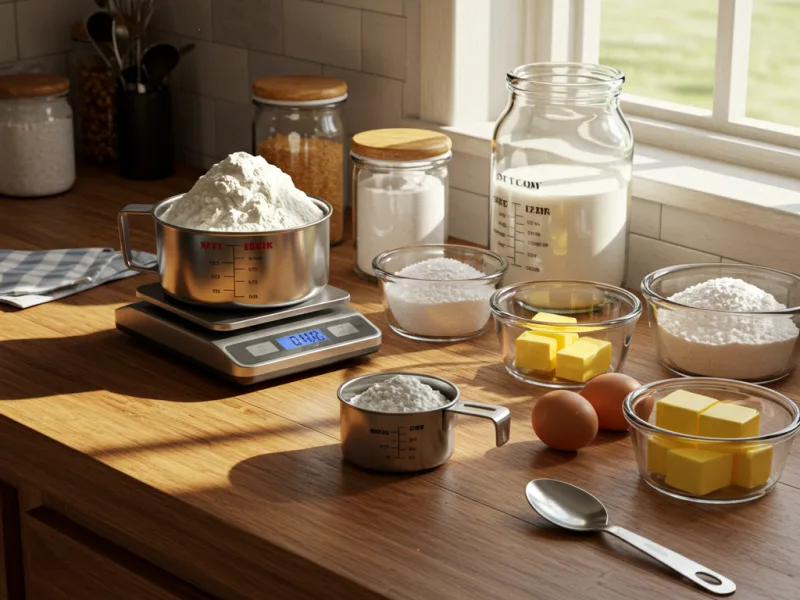
Understanding how to convert cups to grams is one of the most valuable skills in the kitchen. Whether you're baking a cake, mixing a marinade, or preparing a sauce, knowing the exact amount of each ingredient can make or break your recipe. However, not all ingredients weigh the same. A cup of flour doesn't weigh the same as a cup of sugar or a cup of butter. That's why learning the gram equivalents of cups is so important.
This guide offers clear explanations and practical reference points for converting commonly used ingredients, helping you make accurate measurements in your everyday cooking and baking.
Why Converting Cups to Grams Matters
Precision in cooking, especially baking, is essential. Measuring by weight (grams) is much more accurate than using volume (cups) because the density of ingredients varies. This means a cup of one ingredient can weigh significantly more or less than a cup of another.
For instance:
- A cup of all-purpose flour weighs around 120 grams when spooned and leveled.
- A cup of granulated sugar weighs about 200 grams.
- A cup of butter equals approximately 227 grams (that's one standard American stick of butter, times two).
When recipes call for a “cup,” they usually assume a standard U.S. measuring cup, which holds 240 milliliters. But that cup can yield different gram values depending on what’s inside it.
Understanding Volume vs. Weight
It’s easy to confuse volume and weight because we often use them interchangeably. However, volume is the amount of space something occupies (like a cup or a liter), while weight measures mass (like grams or ounces).
Let’s break it down:
- Flour is fluffy and compressible, so the weight of a cup depends on how you scoop it.
- Brown sugar is heavier and often packed tightly, which adds extra weight.
- Honey is dense and thick, so its gram equivalent per cup is quite high.
- Liquids like milk or water usually convert easily because they’re consistent in density.
Common Ingredient Conversions from Cups to Grams
Instead of using a conversion table, here's a clear and descriptive breakdown of how many grams are typically in one U.S. cup of various common ingredients. These are based on average, spooned-and-leveled measurements, which are the most accurate and recommended.
Dry Ingredients
All-Purpose Flour
One of the most frequently used ingredients in baking, all-purpose flour typically weighs:
- 1 cup = 120 grams (when spooned and leveled)
- If scooped directly from the bag, it could be up to 140 grams, which may affect your results.
Bread Flour
- 1 cup = 130 grams
- Slightly heavier than all-purpose due to its higher protein content.
Whole Wheat Flour
- 1 cup = 120 grams
- Similar to white flour in weight, but denser in texture.
Rolled Oats
- 1 cup = 90 grams
- Oats are light, but the rolled structure makes them take up more space.
Cornmeal
- 1 cup = 150 grams
- Finer grains settle more densely in the cup.
Sugars
Granulated White Sugar
- 1 cup = 200 grams
- Sugar is compact and heavy, making it one of the heavier dry ingredients.
Brown Sugar
- 1 cup = 220 grams (packed)
- When tightly packed into a measuring cup, brown sugar becomes very dense.
Powdered (Confectioners') Sugar
- 1 cup = 115 grams
- Much lighter due to its fine texture.
Liquids
Water
- 1 cup = 240 grams
- Because water has a density of 1 g/ml, this is a straightforward conversion.
Milk
- 1 cup = 240 grams
- Similar to water in weight, but slightly higher in density due to its fat content.
Heavy Cream
- 1 cup = 240 grams
- Denser than milk but still fairly consistent.
Honey
- 1 cup = 340 grams
- One of the densest liquid sweeteners.
Maple Syrup
- 1 cup = 322 grams
- A bit lighter than honey but still heavier than water.
Fats and Oils
Butter
- 1 cup = 227 grams
- Equivalent to two sticks of American butter or 16 tablespoons.
Coconut Oil (solid)
- 1 cup = 218 grams
- Like butter, measure when solid unless recipe calls for melted.
Vegetable Oil
- 1 cup = 220 grams
- Slightly denser than water, easy to pour and weigh.
Nuts and Seeds
Almonds (whole)
- 1 cup = 140 grams
- If sliced or chopped, weight will vary.
Walnuts (chopped)
- 1 cup = 120 grams
Sunflower Seeds
- 1 cup = 140 grams
Converting Cups to Grams Without a Scale
If you don’t have a kitchen scale, here are some practical tips to convert cups to grams more reliably:
- Spoon, don’t scoop: For flour and similar dry ingredients, use a spoon to fill the cup, then level it off with a knife. This avoids overpacking.
- Pack where needed: Brown sugar should be firmly packed unless the recipe specifies otherwise.
- Use measuring cups for liquids: Transparent cups with markings ensure more precise liquid measures.
- Understand ingredient density: Some ingredients like cocoa powder or powdered sugar are “light,” while honey or peanut butter are “heavy.”
How Preparation Methods Affect Weight
Did you know the way you prepare an ingredient can drastically change its weight per cup?
For example:
- Chopped onions vs. whole onions: A cup of chopped onions weighs more than an unchopped onion filling the same volume.
- Grated cheese: A cup of finely grated cheese weighs more than coarsely grated.
- Cooked rice: A cup of cooked rice weighs more than a cup of dry rice due to water absorption.
Always follow recipe instructions on the state of the ingredient — fresh, chopped, packed, melted, cooked, etc.
Baking Example: Why Grams Matter
Let’s say you're making a classic vanilla cake. Here’s how your ingredient list might look in grams versus cups:
- Flour: 2 cups → 240 grams
- Sugar: 1½ cups → 300 grams
- Butter: 1 cup → 227 grams
- Milk: 1 cup → 240 grams
- Eggs: 2 large → 100 grams
When using grams, you're ensuring that each measurement is exact, especially important in baking where chemical reactions depend on the right ratios.
Ingredient Preparation Tips
When converting ingredients, how you prepare them matters just as much as how you measure them.
Flour
- Do: Spoon and level to get accurate results.
- Don’t: Scoop directly from the bag — it compacts and gives you too much.
Brown Sugar
- Do: Pack it tightly unless recipe says “lightly packed.”
- Don’t: Shake the cup — it’ll settle and throw off your weight.
Butter
- Do: Use softened butter unless recipe says melted or cold.
- Don’t: Measure melted butter in a dry cup — it’ll stick and under-measure.
Frequently Used Baking Ingredients in Grams
Let’s summarize some of the most common baking ingredients and their gram equivalents for 1 cup:
- All-purpose flour – 120g
- Granulated sugar – 200g
- Brown sugar (packed) – 220g
- Butter – 227g
- Milk – 240g
- Honey – 340g
- Cocoa powder – 100g
- Rolled oats – 90g
Real-Life Recipe: Chocolate Chip Cookies
To demonstrate how conversions help in practice, here’s a popular cookie recipe using gram-based measurements.
Ingredients:
- 240 g all-purpose flour
- 170 g butter, softened
- 150 g brown sugar, packed
- 100 g granulated sugar
- 2 large eggs (about 100 g)
- 1 tsp vanilla extract
- 1 tsp baking soda
- ½ tsp salt
- 200 g chocolate chips
Preparation:
Cream butter and sugars together until fluffy. Beat in eggs and vanilla. In a separate bowl, combine flour, salt, and baking soda. Mix dry ingredients into the wet. Fold in chocolate chips. Scoop dough onto a baking tray and bake at 175°C (350°F) for 10–12 minutes.
This recipe illustrates how switching to grams offers repeatable, consistent results every time.
Why Grams Win in the Kitchen
In the world of cooking and especially baking, accuracy matters. Using grams rather than cups ensures you're measuring with precision and consistency, which leads to better results. Whether you're following a recipe or creating your own, understanding how many grams are in a cup allows for confidence and flexibility in the kitchen.
When you start cooking by weight instead of volume, you unlock the ability to replicate results, reduce waste, and bake like a professional — no matter what’s on the menu.